How to Interpret the Anion Gap in Ketoacidosis
Understanding the anion gap is one of the most useful steps in assessing an acid-based state. An Anion Gap Calculator can speed up the math, but clinical interpretation still depends on the overall pattern of lab values, symptoms, and the acid-base balance. In ketoacidosis, the anion gap helps show whether unmeasured anions are rising because of ketone production, whether the problem is really metabolic acidosis, and whether treatment is working.
This guide walks through the lab logic in stages so you can read the diagnostic pattern with more confidence. It also explains how albumin changes the result, why beta-hydroxybutyrate is important, and how to tell ketoacidosis apart from other causes of high anion gap metabolic acidosis.
What Is
The anion gap represents a calculated value derived from the main ions in a serum chemistry or electrolyte panel. It measures the difference between measured cations and measured anions, assisting identify unmeasured anions in the blood. The classic calculation relies on serum sodium, serum chloride, and serum bicarbonate.
The basic idea is easy to understand: serum sodium represents the major measured positive charge, while serum chloride and serum bicarbonate represent the major measured negative charges. When the gap increases, it often means additional acids or unmeasured anions are present. That makes the anion gap a central part of acid-base interpretation, especially when you are trying to confirm metabolic acidosis.
In practice, the anion gap is a guide into the body’s acid-base balance. A normal value does not guarantee normal physiology, but a high value strongly suggests a metabolic derangement involving unmeasured anions. That is why the anion gap calculator is useful as a quick check, but not a substitute for full clinical interpretation.
Keep in mind that lab reference ranges can vary by method, but the overall concept remains the same. The anion gap helps clarify a practical question: are there extra acids in the bloodstream that are not reflected directly in the standard electrolyte panel?
How the Anion Gap Matters in Ketoacidosis
This condition is a state in which ketones collect enough to drive metabolic acidosis. In this setting, the body forms organic acids, and those acids result in high anion gap metabolic acidosis. The gap NAGMA causes rises because ketones act as unmeasured anions.
This albumin-adjusted AG low albumin is especially important in diabetic ketoacidosis, where insulin deficiency leads to ketone production, dehydration, and worsening acid-base disturbance. As ketones build up, bicarbonate is depleted buffering the acid load, and acidemia develops. The result is a pattern that often includes a low serum bicarbonate, elevated anion gap, and a low pH on blood gas testing.
The anion gap matters because it helps distinguish ketoacidosis from other forms of metabolic acidosis. A patient can have hyperglycemia, ketones, and acidemia, but the gap provides a clearer picture of severity and underlying mechanism. It also helps with treatment response: as ketones fall, the gap should narrow if therapy is effective.
From a clinical interpretation standpoint, the gap is not just a number. It reflects the burden of unmeasured anions and the degree of metabolic derangement. In ketoacidosis, a rising anion gap usually means worsening acid buildup, while a closing gap suggests recovery.
How to Calculate the Anion Gap
The formula for the anion gap is often given as:
Anion gap = serum sodium - (serum chloride + serum bicarbonate)
Some clinicians apply a version that includes potassium, but the sodium-based formula is the most widely used because it is simple to use and fits well with routine laboratory practice. Anion Gap Calculator can handle the arithmetic instantly, but understanding the formula leads to better interpretation.
When interpreting electrolytes, look at the overall laboratory context rather than the gap alone. Sodium, chloride, and bicarbonate each offer clues about the nature of the acid-base disturbance. For example, a low serum bicarbonate with a high anion gap typically points to accumulation of unmeasured anions rather than a simple isolated electrolyte issue.
Albumin is a major unmeasured anion, so low albumin can make the calculated gap appear falsely normal or only mildly elevated. That is why albumin correction is needed. A corrected anion gap raises the measured value upward when albumin is low, showing hidden anion gap elevation that might otherwise be missed.
A common correction adds roughly 2.5 mEq/L to the anion gap for each 1 g/dL drop in albumin below normal, though exact formulas may vary. The key point is that albumin changes interpretation. Without correction, you may underestimate the severity of high anion gap metabolic acidosis, especially in more ill patients.
So, the calculation is not just math. It is a tool for clinical interpretation that must be integrated with electrolytes, albumin, and the complete acid-base status.
Characteristic Testing Patterns in Diabetic ketoacidosis
Diabetic ketoacidosis usually presents with a typical profile across blood sugar, serum bicarbonate, and blood gas results. Blood glucose is commonly high, sometimes very, but the key feature is not high blood sugar alone. The key feature is the presence of ketone bodies, acidosis, and a elevated anion gap.
The serum bicarbonate is typically low because bicarbonate is used up buffering the excess acids. An arterial gas often shows low pH and low bicarbonate, with respiratory compensation in the form of a low pCO2. A venous blood gas may also be useful for evaluating pH and bicarbonate in many cases, especially when repeated measures are needed during treatment.
Standard lab interpretation looks like this:
- Elevated blood glucose in most, but not all, cases
- Reduced serum bicarbonate level
- High anion gap
- Detectable ketones or elevated beta-hydroxybutyrate
- Acidemia on arterial blood gas or venous blood gas
Beta-hydroxybutyrate deserves particular attention because it is the main ketone in many patients with DKA. Urine ketone tests can miss severity early on because they may not capture beta-hydroxybutyrate well. A direct beta-hydroxybutyrate level is often more useful clinically for diagnosis and treatment response.
Compensatory hyperventilation is another important clue. Patients often breathe deeply to decrease carbon dioxide and partially offset the acid load. That compensation does not resolve the problem, but it helps explain why the pH may be somewhat less severe than expected given the low bicarbonate and high anion gap.
In general, the diagnostic pattern in diabetic ketoacidosis is a high anion gap metabolic acidosis driven by ketones, with lab findings that indicate insulin deficiency and dehydration.
How the Anion Gap Varies During Therapy
During therapy, the anion gap should begin to fall as ketone production decreases and existing ketones are cleared. Insulin therapy is the main driver of this improvement because it suppresses lipolysis and reduces ketone production. As insulin restores metabolic control, beta-hydroxybutyrate falls and gap closure follows.
Fluid resuscitation also plays a crucial role. Dehydration worsens perfusion and limits renal clearance of acids and ketones, so fluids help improve circulation and support recovery. In many cases, the earliest signs of improvement are seen in the serum chemistry: the gap narrows, bicarbonate begins to rise, and blood glucose trends down with treatment.
It is vital not to focus on blood glucose alone as the marker of recovery. Blood glucose may improve before the ketoacidosis has fully cleared. A patient can have a lower glucose but still have persistent ketones and an elevated anion gap. That is why treatment response should be assessed using the complete clinical picture, including acid-base status, beta-hydroxybutyrate, and laboratory trend monitoring.
As the gap closes, repeat testing with an Anion Gap Calculator can help confirm that therapy is working. If the gap remains elevated, clinicians should think about ongoing ketone production, inadequate insulin therapy, persistent dehydration, or another cause of high anion gap metabolic acidosis.
In short, gap closure is a practical marker of resolution, but it should be interpreted alongside pH, bicarbonate, and the entire lab trajectory.
How to Differentiate Ketoacidosis From Alternative Causes of High Anion Gap
Not every high anion gap metabolic acidosis is ketoacidosis. The most useful way to distinguish causes is to match the lab pattern with the clinical context and verify which unmeasured anions are likely present.
Lactic acidosis is a frequent alternative cause. It often occurs with hypoperfusion, sepsis, or severe physiologic stress. The lactate level helps identify this cause, and ketones may be absent or only mildly elevated. In ketoacidosis, beta-hydroxybutyrate is usually far more prominent.
Renal failure can also cause a high anion gap because retained acids accumulate when kidney excretion is impaired. In that setting, the pattern may coincide with other metabolic derangements, so creatinine, blood urea nitrogen, and clinical history become important.
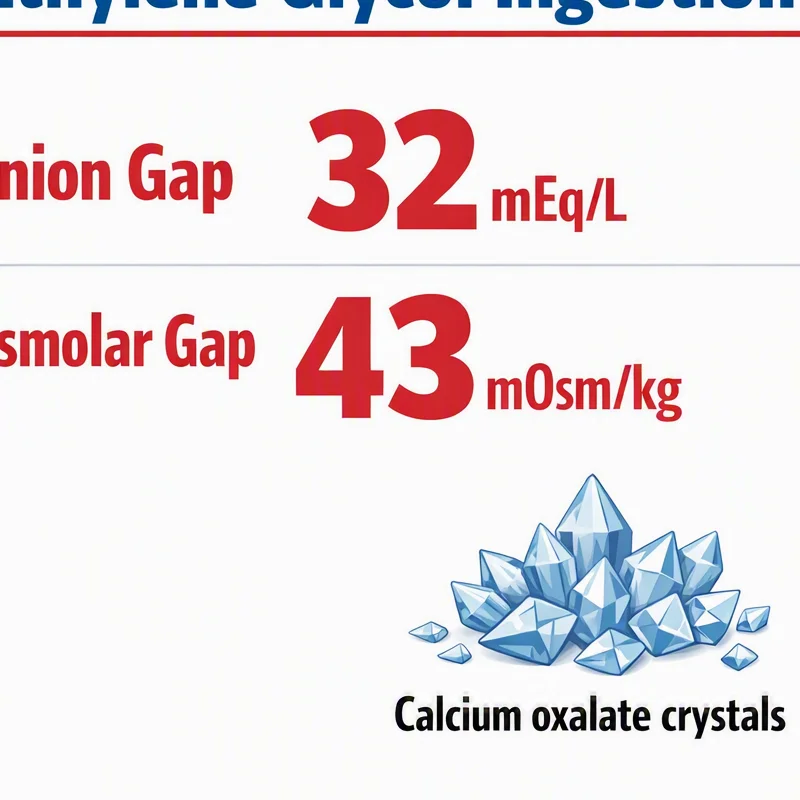
Toxic alcohols such as methanol or ethylene glycol can produce severe high anion gap metabolic acidosis. They may also cause an osmolar gap early on. The history of ingestion, neurologic findings, and lab screening are critical clues because the presentation can resemble other acidotic states.
Salicylates can create a mixed acid-base disorder with both respiratory alkalosis and metabolic acidosis. That makes interpretation more complicated than simple ketoacidosis. A salicylate level and careful review of arterial blood gas findings are helpful when the story does not fit classic diabetic ketoacidosis.
To separate these conditions, ask:
- Are ketones or beta-hydroxybutyrate clearly elevated?
- Is the blood glucose high enough to support diabetic ketoacidosis?
- Is the lactate elevated enough to explain the gap?
- Is there evidence of renal failure or toxin exposure?
- Does arterial blood gas show a mixed pattern?
The best clinical interpretation comes from combining the anion gap with the rest of the workup, not using the number in isolation.
Frequent Reading Errors
A typical pitfall is believing a normal anion gap eliminates ketoacidosis. That is not always true. Early-stage disease, a combined acid-base disorder, or low albumin can hide the expected elevation. A patient may still have ketosis and metabolic acidosis even if the gap seems normal at first glance.
Another common error is overlooking albumin correction. Because albumin contributes to the measured balance of ions, low albumin can mask a true anion gap elevation. If albumin is low, the corrected anion gap may show clinically meaningful acidosis that the raw value fails to show.
Another error is overlooking a mixed acid-base disorder. For example, vomiting can create a metabolic alkalosis that partially counteracts the acidosis. In that case, pH may look less concerning even though the patient has ongoing ketoacidosis. The delta gap can assist in identifying this situation by comparing the rise in anion gap to the fall in bicarbonate.
The delta gap is particularly helpful when the clinical picture is ambiguous. If the gap is elevated more than expected relative to bicarbonate reduction, another metabolic process may be present. If the changes do not match, suspect mixed acid-base disorder rather than presuming a single diagnosis.
In the end, do not rely on a single value. Lab interpretation is strongest when you review serial values, not just one snapshot. Trends in bicarbonate, beta-hydroxybutyrate, pH, and the anion gap are much more informative than any single result.
Good clinical interpretation means understanding the pattern, the correction, and the underlying physiology rather than just plugging numbers into an Anion Gap Calculator.
FAQ: Anion Gap and Ketoacidosis
What anion gap value suggests ketoacidosis?
A value above the local reference range points toward ketoacidosis, especially when it occurs with ketones, low serum bicarbonate, and acidemia. The exact cutoff depends on the laboratory method, so interpretation should use the lab’s normal range and the overall clinical picture rather than a single universal number.
Can a standard anion gap rule out ketoacidosis?
No, it does not. A normal anion gap may still miss ketoacidosis. Early illness, albumin correction errors, or a mixed acid-base disorder can hide the elevation. When symptoms and other lab values suggest metabolic acidosis, check ketones, beta-hydroxybutyrate, pH, and bicarbonate closely.
For what reason do you correct the anion gap for albumin?
Albumin is a key unmeasured anion, so low albumin can make the anion gap look falsely normal or not as elevated than it really is. Correcting for albumin improves lab interpretation and helps reveal hidden high anion gap metabolic acidosis.
How does the anion gap change after insulin treatment starts?
With effective insulin therapy, ketone production falls, beta-hydroxybutyrate decreases, and the anion gap should gradually close. Fluid resuscitation also supports recovery by improving perfusion and renal clearance. If the gap does not improve, consider again for ongoing ketoacidosis or another cause of metabolic acidosis.
What other conditions can cause a high anion gap besides ketoacidosis?
Common alternatives include lactic acidosis, renal failure, toxic alcohols, and salicylates. Each has its own diagnostic pattern, so the best approach is to interpret together the anion gap with blood gas results, lactate, kidney function, toxin history, and the overall acid-base balance.